- Home
- New Kyurizukai
- Elementary Particle Observation from Keio's Faculty of Science and Technology
Elementary Particle Observation from Keio's Faculty of Science and Technology Using enormous equipment to explore tiny particles and the laws of the universe
Leading Major Undertakings with the Joy of Creating and an Exceptional Curiosity
As a young boy, good with his hands and quick to make things, Nishimura was fascinated by the building blocks of the very cosmos and chose to become a physicist. Looking ahead, he is eager to work with graduate students and early-career researchers on the long-term observations at Hyper-Kamiokande, gradually uncovering the secrets to the mysteries and origin of our universe.
Yasuhiro Nishimura
Nishimura specializes in particle physics and cosmic-ray experiments. Originally from Fukuoka Prefecture, he earned his bachelor’s degree from the Faculty of Science at Kyoto University, and then enrolled in the University of Tokyo’s Graduate School of Science, where he received his Ph.D. in Science in March 2011 for his research on muon rare decay conducted at the Paul Scherrer Institute in Switzerland. In April 2011, he became a project researcher for Institute for Cosmic Ray Research, the University of Tokyo, and a year later he was appointed as an assistant professor, engaging in neutrino and nucleon decay experiments. Then, in 2019, he assumed his current position as an associate professor at Keio University’s Department of Physics in the Faculty of Science and Technology.
The Research
This feature explores Associate Professor Yasuhiro Nishimura’s background and probes his research on the origins of the universe via breakthroughs in neutrino observations.
Observing Neutrinos with Hyper-Kamiokande
Unraveling the Mystery of the Origin of the Universe and the Theory of Everything
In order to solve the mysteries behind the beginning of the universe, we must first understand the elementary particles that are the smallest building blocks of all matter. One of these, the neutrino, is an especially critical piece to this grand puzzle. In 2028, Hyper-Kamiokande, an observational facility for subatomic particles, will open for experiments, building off of past models: Kamiokande and Super-Kamiokande. Nishimura is in charge of developing the photodetector that lies at the heart of this technology. As one of the key figures in this impressive undertaking, Nishimura is intent on making sure his preparations pay off.
The near impossibility of observing elementary particles
“Subatomic particles are the smallest elements in existence,” says Nishimura. “By understanding their behavior, we can parse the laws behind the very universe itself and verify how it came to be.” Our world is made up of matter, force, and mass[1.1][YN1.2] created by 17 subatomic particles with different characteristics (Figure 1).
To give an example, the matter of our bodies is mainly made up out of three types of particles: up quarks, down quarks, and electrons (a type of lepton). Likewise, there are gauge bosons that act as force carriers and Higgs bosons that produce mass. Different particles are subject to different types and magnitudes of forces, especially neutrinos (another type of lepton), which have very low mass and exert minimal forces on their surroundings. While hundreds of trillions of neutrinos come into contact with us every single second from space, most of them pass through the earth.
This is where certain Japanese researchers have taken on the challenge of observing these elusive particles. In 1987, they were the first in the world to discover neutrinos that had been emitted from supernova explosions. They went on to observe atmospheric neutrinos produced by cosmic rays entering the earth’s atmosphere and even found that muon neutrinos could change into other flavors (types) of neutrinos, a process known as neutrino oscillation, thereby proving that neutrinos have mass. These discoveries were made possible by Japan’s world-class subatomic particle detectors, Kamiokande and Super-Kamiokande, in Gifu Prefecture and earned Dr. Masatoshi Koshiba and Dr. Takaaki Kajita the Nobel Prize in Physics in 2002 and 2015, respectively.
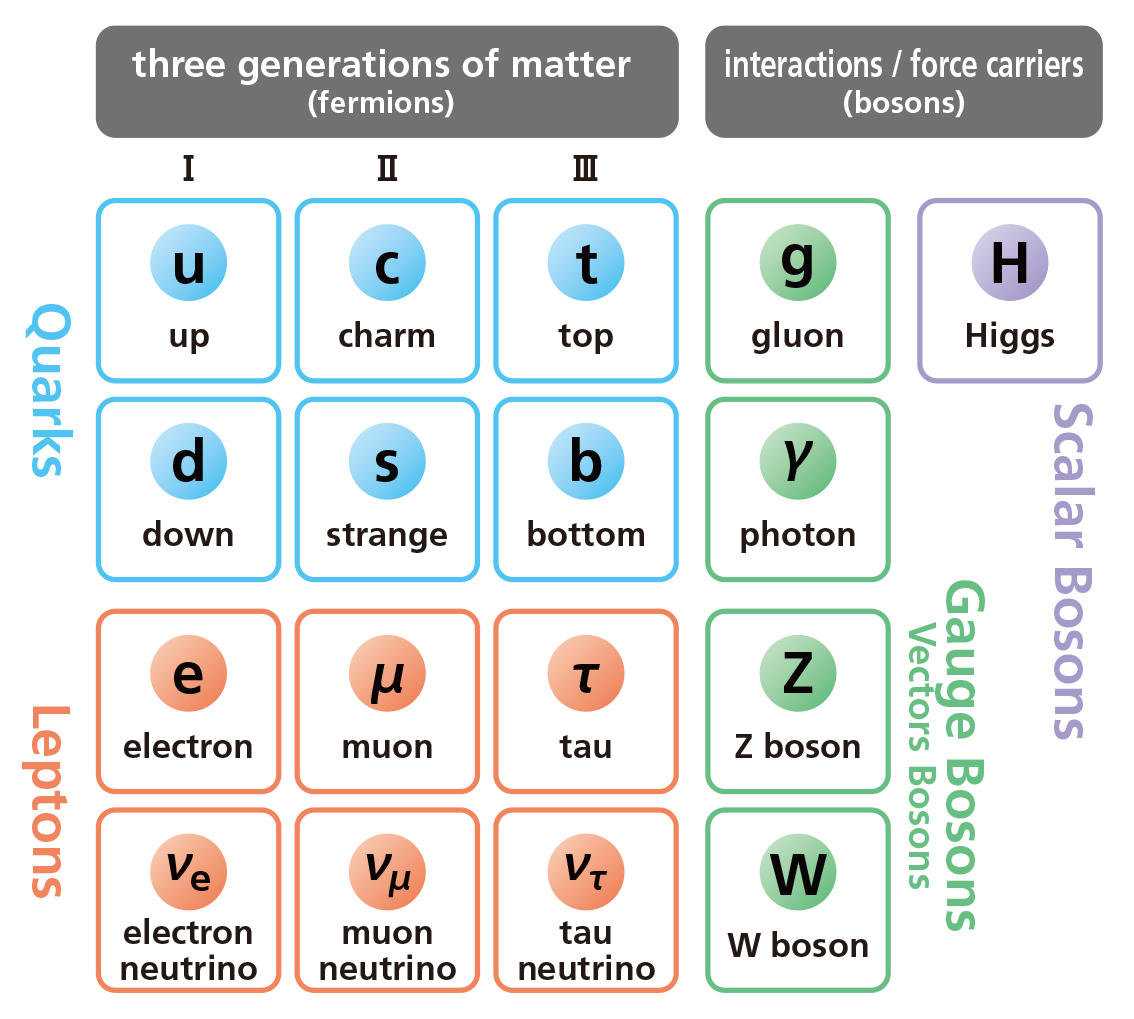
Fig 1: The standard model of elementary particles
There are four categories of elementary particles. Electrons and neutrinos are both types of leptons. I–III are classified by mass. Neutrinos have the least mass, no electric charge, and very weak interactions with other particles. There are three flavors of neutrino: electron neutrinos, muon neutrinos, and tau neutrinos. However, a strange phenomenon that occurs with neutrinos is that they can change flavor as they travel. This process is known as “neutrino oscillation.”
Observing neutrinos to find the answers to key questions
When Dr. Kajita was awarded the Nobel Prize, Nishimura was working under him as an assistant professor at the University of Tokyo. He heard the news of the award from the next room over. Nishimura has been a core researcher involved in elementary particle research over the years. As a graduate student, he focused on the little-understood phenomenon of muons decaying into electrons and gamma rays. His work tested the Grand Unified Theory, which seeks to incorporate the “strong” force that binds the quarks making up protons and neutrons in atomic nuclei into the theory that unifies the “electromagnetic” and “weak” forces, known as the electroweak theory. After this project, he got involved in neutrino observation research, participating in the T2K experiment which involved beaming artificially produced neutrinos from the J-PARC accelerator facility in Ibaraki Prefecture to Super-Kamiokande over 295 kilometers away. Then, in 2013, his team discovered that muon neutrinos can oscillate into electron neutrinos. This was the final step in ascertaining that all three types of neutrino oscillation were possible.
This breakthrough provided the impetus for beginning construction on the long-considered Hyper-Kamiokande as a more advanced successor to the Super-Kamiokande (Figure 2). In discussing his expectations for Hyper-Kamiokande, Nishimura explains, “Japan is leading the way in research on neutrinos. Our detectors are especially sensitive to proton decay. We are also hoping to discover CP violations through neutrino observations.”
Proton decay is predicted by the Grand Unified Theory but has not yet been observed. If researchers are able to confirm this phenomenon, it will greatly enhance our understanding of the origin of the universe and matter. It may also provide insight into what the universe will look like after proton decay progresses. In addition, CP violations refer to the phenomenon in which a particle’s behavior changes under a combination of C transformations (charge conjugation, swapping particles with their antiparticles, such as electrons and positrons) and P transformations (parity inversion, reflecting spatial coordinates like switching left and right). While scientists have discovered such CP violations in quarks, they have yet to observe them in leptons. If researchers are able to detect them, they could determine how large the violations are. It may also provide clues as to why the antiparticles that were created alongside particles at the birth of the universe have now disappeared.
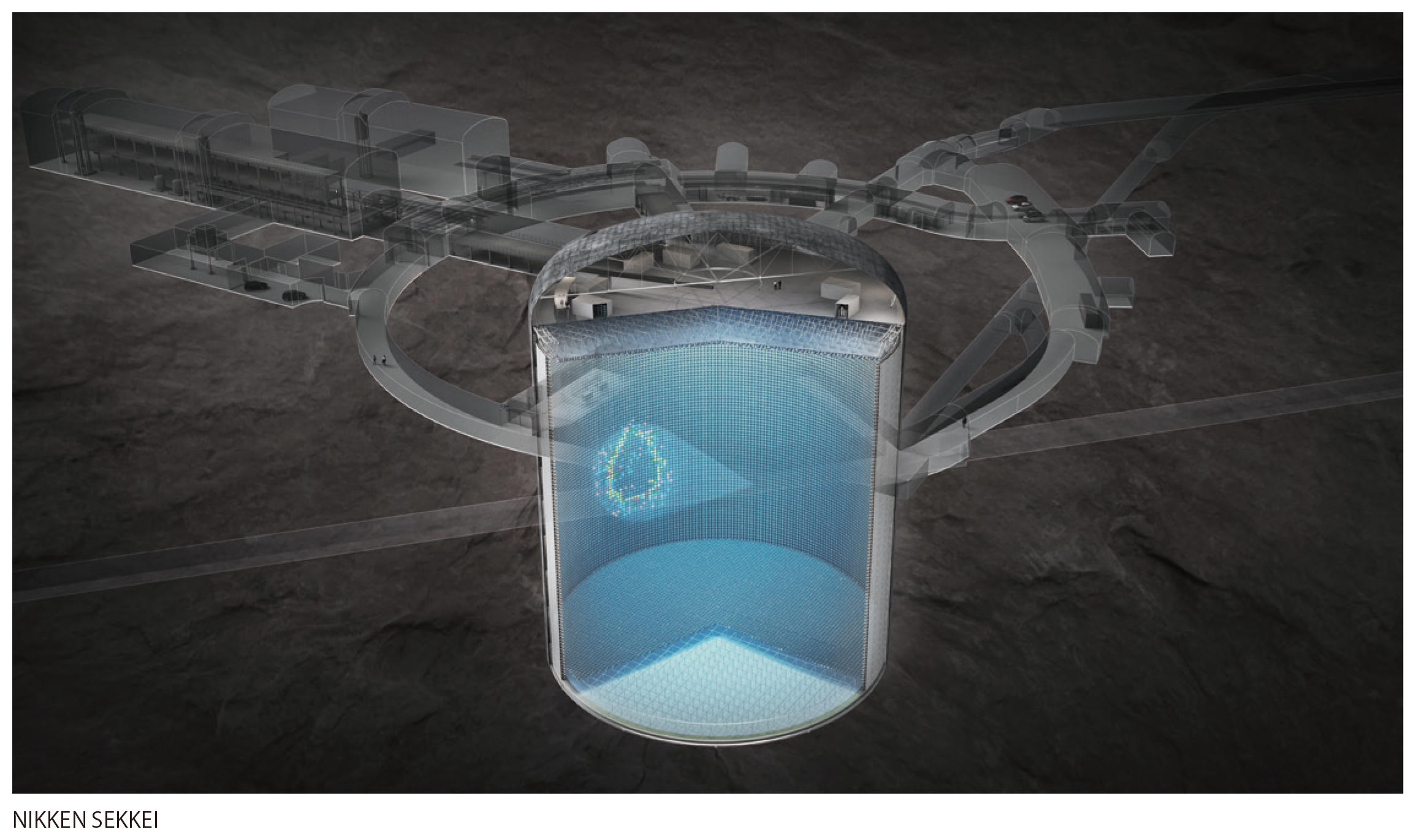
Figure 2: Hyper-Kamiokande
Construction is underway in Kamioka-cho, Hida, Gifu Prefecture, scheduled to be in operation in 2028. Excavation of the massive underground cavern was completed on July 31, 2025.
Developing the high-performance photomultiplier tubes that lie at the heart of observational experiments
Preparations are currently underway for Hyper-Kamiokande, with the facility becoming fully operational for experiments in 2028. The underground water tank will grow from Super-Kamiokande’s 50 kilotons to 260 kilotons, an 8.4-fold expansion in detection volume. Likewise, the performance of the photodetectors (photomultiplier tubes) will be doubled. Because neutrinos cannot be observed directly, photodetectors sense the Cherenkov light produced when neutrinos collide with water. The brightness and pattern of the resulting light rings allow researchers to infer the neutrinos’ energy, direction, and type (Figure 3). In a way, the photodetectors in this machinery are the heart and soul of the entire system. Nishimura has been tasked with leading this development process since 2012.
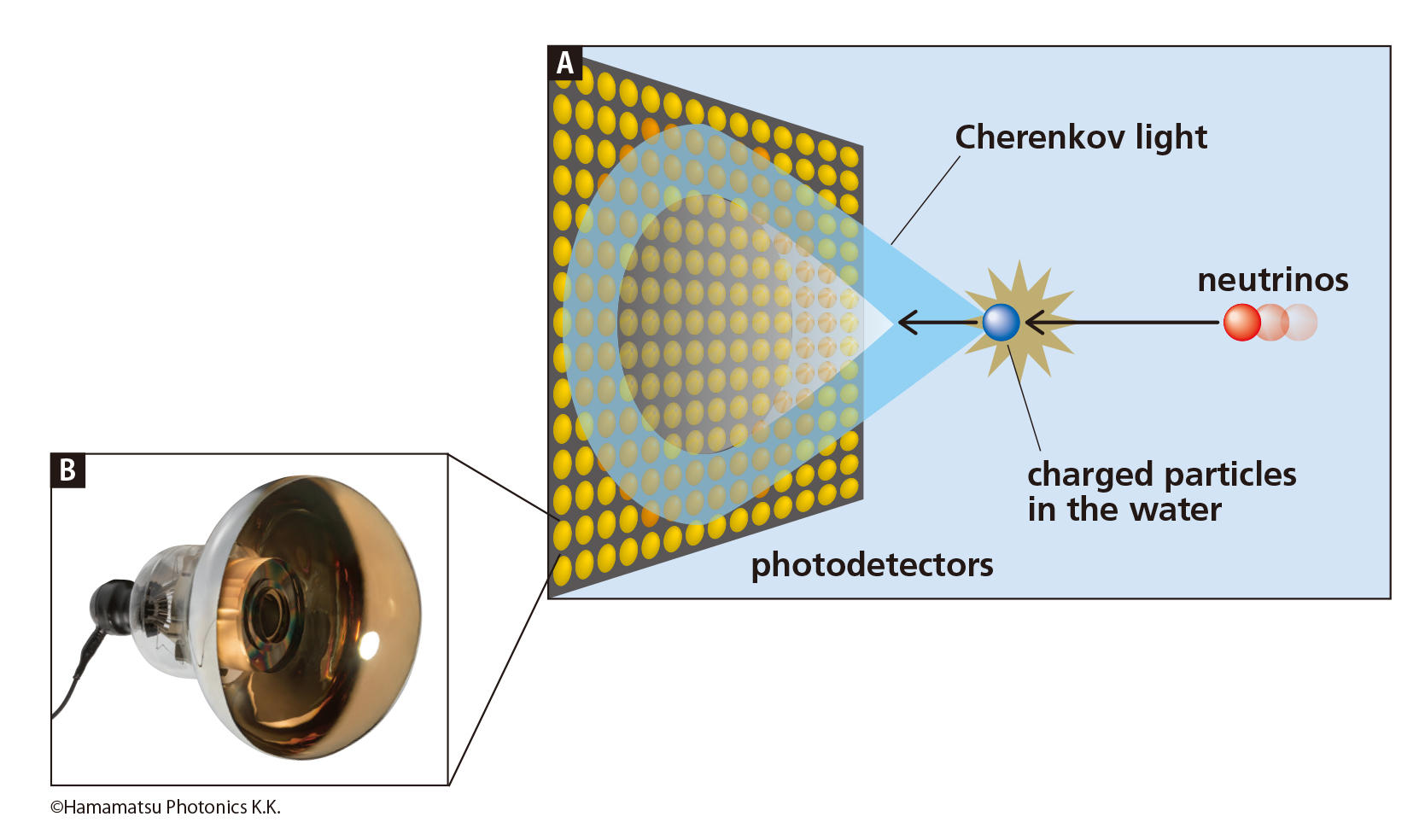
Figure 3: How photodetectors sense neutrinos
(A) When neutrinos entering the detector collide with the water in the tank, the charged particles that are ejected emit light (Cherenkov light), which is captured by photodetectors (B) mounted on the walls of the tank.
After countless rounds of experimentation and prototyping, they have settled on a larger photodetector design that has a diameter of 50 cm. While this model quickly achieved the doubled performance that the researchers were targeting, they had difficulty ensuring that the detectors would be pressure resistant, durable, and stable. The water tanks have increased in depth from 40 m to 70 m, meaning that the photodetectors must be able to withstand much higher levels of pressure than in the past. Different shapes and protective housings were devised to withstand the new requirements. Additionally, the new system requires the installation of over 20,000 photodetectors, meaning that it will be difficult to replace them should they get damaged. Speaking on some of the time effort that has gone into this process, Nishimura explained, “It takes months just to drain the tanks. And who knows? While we’re doing that, we might miss a long-awaited supernova explosion. We had to ensure that the equipment was reliable for at least ten years so that experiments won’t be interrupted.” The researchers also ran a number of studies to figure out how to reduce noise. For instance, the team has examined the raw materials that go into glass during the manufacturing process to reduce potential impurities and improve the final product. They then conducted extensive testing to confirm the stability of the final product.
In 2018, the team was able to demonstrate proof of concept by inserting approximately 100 of these photodetectors into Super-Kamiokande for observation. However, it wasn’t until 2020 that they were able to fully meet all of the final performance parameters. Currently, 20,000 units are being manufactured and are scheduled to be installed in 2027. “Particle experiments are extremely time-consuming and expensive to set up. 2028 is going to be a major milestone once everything finally gets underway,” said Nishimura.
Over 600 researchers have been involved in the development of Hyper-Kamiokande. With so many people working together to make this project a success, good teamwork has been an essential ingredient. “The actual hands-on work is mostly handled by junior colleagues and graduate students, so they are playing very active roles in this process. This is a long-term research endeavor, so I really want to leverage the longevity of this project to help educate and train the next generation of researchers.” As a student, Dr. Kajita participated in the original development of Kamiokande. Similarly, Nishimura was involved with Super-Kamiokande early in his career. Hyper-Kamiokande is certain to draw in bright minds and continue building on this distinguished legacy.
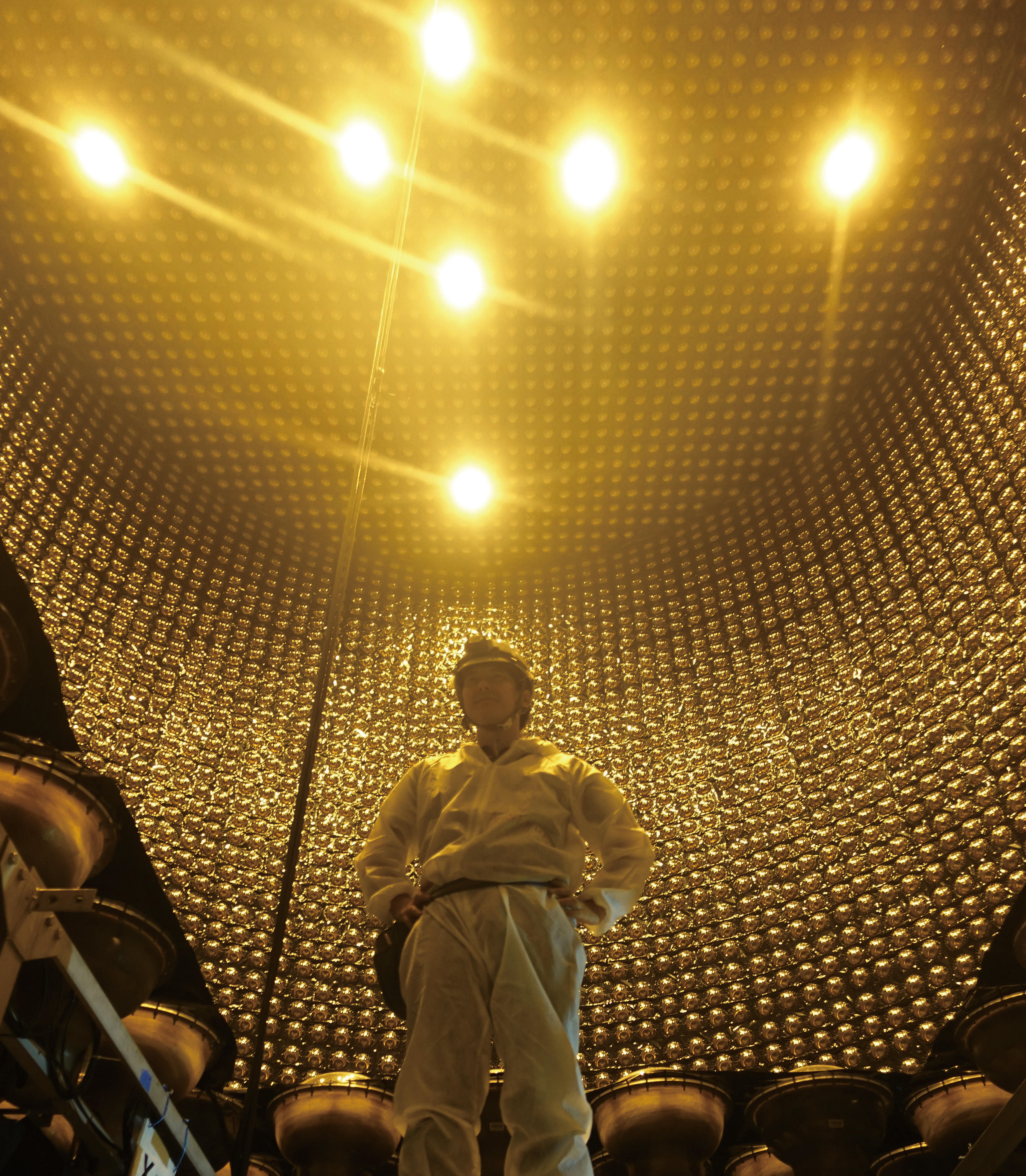
Figure 4: An inside look at the experimental apparatus
This image shows about 100 new photodetectors for Hyper-Kamiokande being installed in Super-Kamiokande (about 40 m in diameter and 40 m deep) as an advance trial. Nishimura stands at the center of the image. The yellow lights dotting the image are the photomultiplier tubes.
Interview
The Interview: Associate Professor Yasuhiro Nishimura
A childhood overflowing with curiosity and the desire to create
What were things like for you as a child?
I loved making and building things from a young age. Even in kindergarten, I remember making structures out of clay and blocks. I was the curious kid who wanted to know the “why” behind everything, always asking questions. In first grade, my father bought me a biography of Thomas Edison, so there was a long period of time when I wanted to become an inventor. I liked things that light up, so I would connect miniature bulbs to a battery, tried to make a motor using a kit, borrowed books on building and crafting from the library, and learned how to make switches.
Around third grade, I had my parents enroll me in an electronics correspondence course where I learned how to solder by watching instructional videos. I liked to look at electrical circuits and build them from scratch, so I tried my hand at various types. As time went on, I began to put different circuits together, take electronics apart and try to build my own by putting them in new casings that I had made.
In addition to my work with electronics, I also started to learn how to program. My family didn’t have a gaming console back then, so instead, I used to write my own games on our computer (an NEC PC-9800 series).
Another thing I remember was my obsession watching the NHK Special, Romantic Einstein. When I first learned about the theory of relativity, I was astonished by the idea that if the speed of light remains constant, an object’s length and the passage of time itself change as it moves. From there, my interest broadened to subatomic particles and quantum mechanics.
In fifth or sixth grade, I came across some manga called Dr. Atom’s Scientific Explorations and Dr. Atom’s Theory of Relativity. These volumes presented advanced physics in a way that even elementary school students could understand, and it introduced me to things like relativity calculations and molecular covalent bonds. Looking back, the things I once did for fun as a kid have, unexpectedly, have come full circle with the research I do today.
Contributing to new discoveries on neutrino oscillation through high-speed analysis
How did you begin your research on subatomic particles?
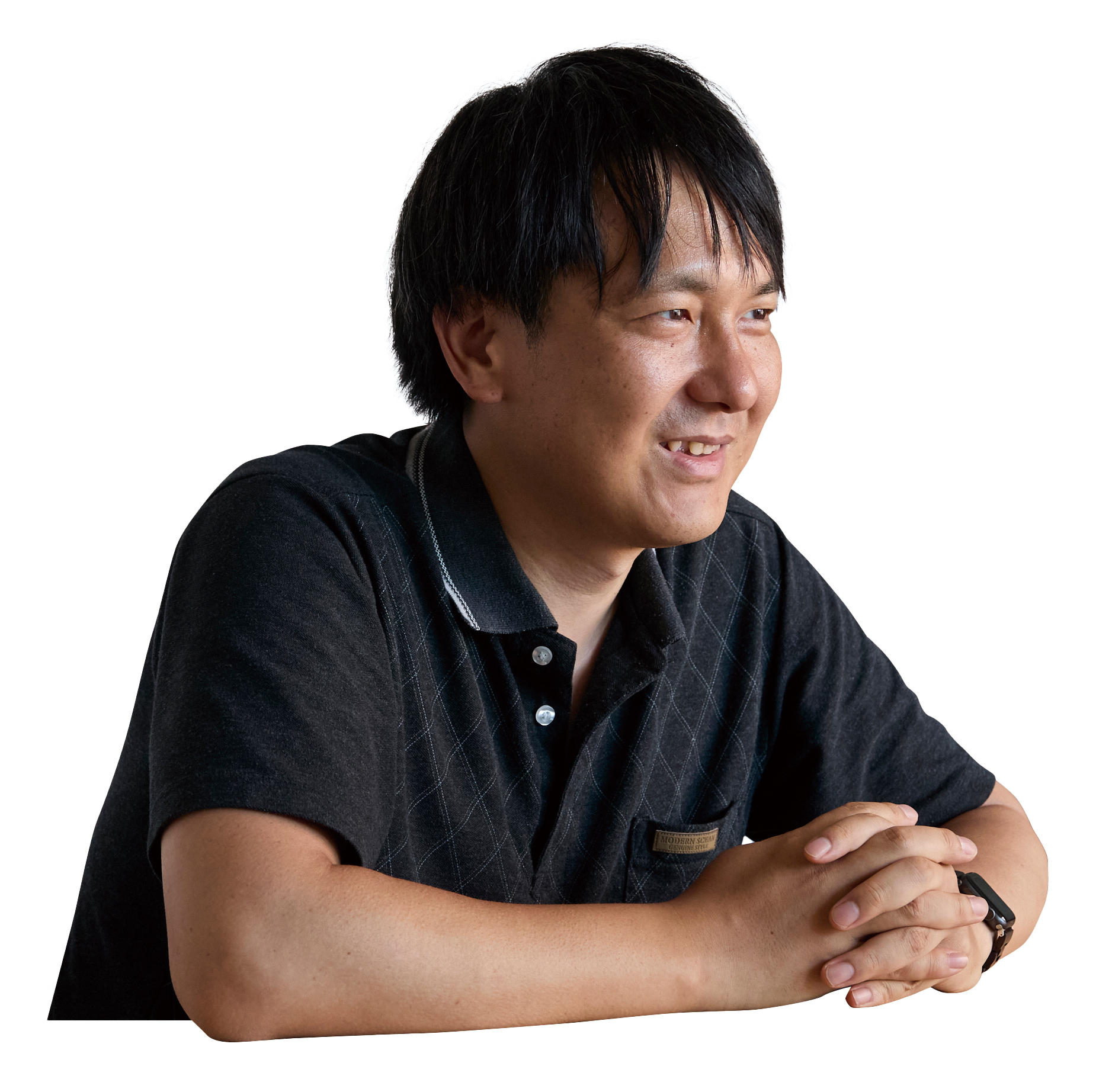
I enrolled at Kyoto University to study physics. In my undergraduate thesis research, I was first exposed to particle physics experiments involving constructing detectors and observing scattered electrons. My fascination with muon decay experiments exploring new physical phenomena (the Mu–e gamma experiment) led me to pursue graduate studies at the University of Tokyo, where I conducted research at the Paul Scherrer Institute (PSI) in Switzerland. I am not good at working with large groups of people, so I avoided the 3,000-scientist experiments at the European Organization for Nuclear Research (CERN), but I wasn’t able to escape joint work altogether. Even now, when I have the chance to work on electronics or programming by myself, it’s calming and allows me to re-center. It was an environment where I was free to do anything, so I experimented with all sorts of ideas. In my research at the time, we observed gamma rays produced from the decay of large numbers of muons, using photomultiplier tubes that we had soldered and arranged to cover the entire detector surface, much like in Kamiokande. After finishing my doctoral dissertation, I was supposed to become a researcher at Super-Kamiokande using neutrino beams from facilities in Tōkai, Ibaraki Prefecture. However, right before I graduated in 2011, the Great East Japan Earthquake happened, stopping the beam experiment. As soon as international flights resumed, I returned to Japan from Switzerland and began analyzing the data I had collected up to that point, aiming to publish the first results within a few months, ahead of several other experiments then underway around the world. After that, I moved to the University of Tokyo’s Institute for Cosmic Ray Research in Kashiwa, Chiba Prefecture, where, in 2013, we successfully demonstrated and announced the discovery that muon neutrinos can transform into electron neutrinos. In 2012, preliminary design research for Hyper-Kamiokande began, and I started working on improving the performance of photodetectors, leading to my current research. This was to be a long-term project, and since I had already had a hard time with the T2K experiment, I turned down multiple invitations to get involved. It was only after the third time that I finally made up my mind and started down this path.
After this, you started working at Keio University and continued your research on photodetectors?
That’s right. I came to Keio in 2019. Hyper-Kamiokande involves a large number of researchers, and there is still a great deal of work to be done. Even before this, I had been conducting important research on photodetectors and detection techniques together with graduate students from various universities. At Keio, I have continued this work and finally completed it. Now, the photodetectors are at the stage where we are mass-producing them. In the future, we will work on installing them and making sure that things function on site. This is a very intensive process, so I am looking forward to doing it alongside the students at Keio.
The individuality that defines Keio students
What are your expectations for Keio students?
At first glance, everyone is a serious student and gives off a similar impression, but on closer look they each have their own quirks and strengths. There’s endless potential here. Even if they don’t know what to do at first, they ask sharp questions, grow in unexpected ways, and have fun beyond their wildest expectations.
Particle experiments require a variety of roles. Not only do you need people who can analyze data and run simulations, you need people who can write programs for the equipment and actually put together the machines. You also need people who are extremely detail oriented when doing the delicate work of adjusting the equipment and testing their sensitivity and output. The range of work is incredibly broad, and I love how this type of research project lets each individual and interest shine.
It sounds like you focus a lot on nurturing your students as part of your teaching approach.
Most students have no idea what they are capable of. I think it’s best for them to start by trying out a variety of things, build up their basic skills, and then broaden their horizons from there. Eventually they will all need to choose their specialties, but my goal is to guide them to try different outlets and take a more scenic route to their destinations.
An interest in caves and underground facilities
How do you like to unwind?
Actually, back in college I was very interested in modern art and even joined an art club. I made a variety of pieces using different media, including paper-cuttings and sand paintings. Even now, when I have some spare time on business trips, I will stop by local art or science museums. I also like the Echigo-Tsumari Art Triennale in Niigata and other regional art festivals. The entire area becomes part of the exhibition, and I enjoy seeing how creative the art pieces are, showcasing ideas I never would have imagined on my own.
Also, for some reason I tend to enjoy dark places, so I will often visit caves and other underground sites. Cappadocia and Naples have huge underground cities. I’ve always wanted to visit the underground tunnels beneath Keio’s Hiyoshi Campus, where the Imperial Japanese Navy’s Combined Fleet Headquarters and other command posts were located during World War II. I have also been to see the Metropolitan Area Outer Underground Discharge Channel that helps prevent flooding in Tokyo. I didn’t choose to get involved with Hyper-Kamiokande because I like to be underground, but I have to admit I find the atmosphere calming.
Sharing the accomplishments of Hyper-Kamiokande with the younger generation
What will be the significance of Hyper-Kamiokande particle experiments?
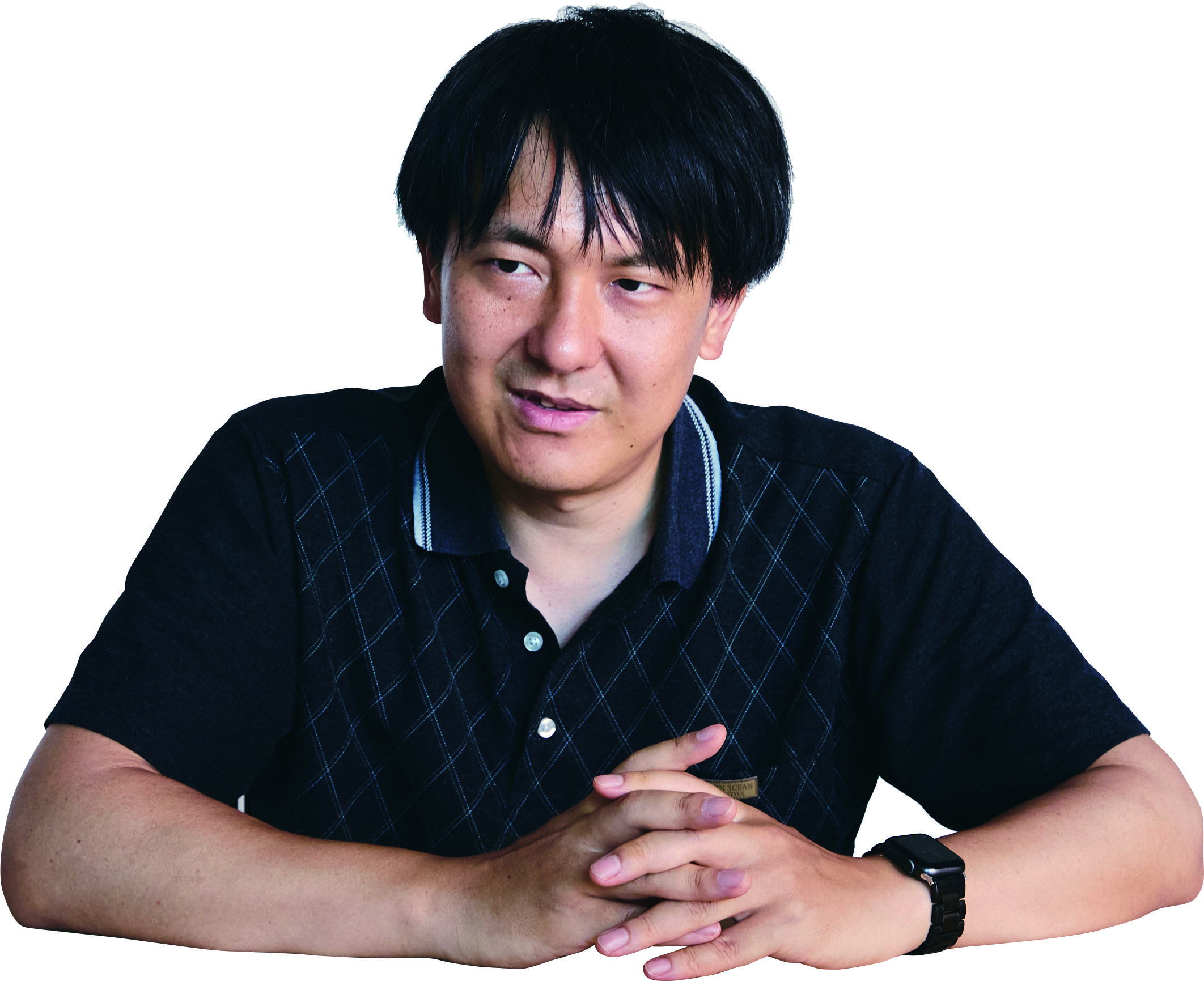
Under our current understanding of theoretical physics, there are various models and systems that have been proposed including the Standard Model. We cannot know which theories are accurate using only mathematical computations, so we need experimental demonstrations to find out which models are correct. One such example is how we plan to use Hyper-Kamiokande to observe CP violations and proton decay. I hope that we are able to find the map that will help us find our way to tell the story of our world.
I have heard that you also anticipate observing cosmic rays.
Observations of the universe began with light. However, light cannot reach the earth if it is blocked by matter. In recent years, gravitational waves have also begun to be observed, but they too are deflected by gravitational fields. Neutrinos, on the other hand, are able pass through most forms of matter unobstructed. To understand something that has traveled from far away is to understand the past. We can observe things on earth that are from when the universe was formed.
There were large numbers of supernova explosions in the early days of the universe, and the neutrinos from these phenomena have drifted to various places. At Super-Kamiokande, we are currently conducting research aimed at detecting ancient neutrinos drifting through the universe, while avoiding interference from neutrinos originating from the Sun and other sources.
With the Hyper-Kamiokande’s vast performance improvements, we should see breakthroughs in a variety of studies in the next ten to twenty years. In other words, it’s an incredibly exciting time for high school, college, and graduate students to get involved in this research.
Some words from Students…
● I came to Keio from Taiwan to study proton decay signals. Professor Nishimura has given me a ton of freedom to pursue this topic. (3rd year Ph.D. student)
● Professor Nishimura’s active role with Super-Kamiokande and Hyper-Kamiokande puts him at the cutting edge of research on subatomic particles. I’m currently involved with the photodetectors, and Professor Nishimura is great about giving me clear feedback and advice about the trajectory of my research during the daily meetings. He always takes the time to answer my questions and is very kind, which allows me to be comfortable while conducting my research (1st year master’s student).
(Interview and text writer: Yuko Hiratsuka)
Be sure to check out the video version too!